
.png)

Travel While Your Immigration Case is Pending

By Jarbath Peña Law Group

You have filed your immigration paperwork, paid the fees, and now you are in the dreaded "waiting game." While you wait for USCIS to make a decision, life goes on. A cousin gets married back home, a parent falls ill, or maybe you just need a vacation. The question naturally arises: "Can I travel outside the U.S. while my case is pending?"
The answer is maybe, but with several asterisks. Traveling internationally while you have an active immigration application is one of the riskiest things you can do if you aren't prepared. One wrong move—like leaving without the right permission—can cause your application to be instantly denied and could even bar you from re-entering the United States.
Before you book that flight, you need to understand the rules. This guide will walk you through the risks, the necessary documents, and the specific situations where you should definitely stay put.
The General Rule: "Abandonment"

To understand why travel is risky, you have to understand a legal concept called abandonment.
If you have a pending application for Adjustment of Status (a Green Card application filed from within the U.S.), USCIS generally assumes that by leaving the country, you no longer want to pursue your application. If you leave without permission, they will consider your application "abandoned" and deny it.
Imagine standing in a long line for a concert ticket. If you step out of line to go grab a coffee without telling anyone or holding your spot, you lose your place. Immigration works similarly. You need a "hall pass" to step out of line without losing your spot.
The "Hall Pass": Advance Parole

For most applicants, this "hall pass" is a document called Advance Parole.
Advance Parole serves two vital purposes:
It allows you to leave the United States without abandoning your pending Green Card application.
It allows you to return to the U.S. after your trip (though re-entry is never 100% guaranteed).
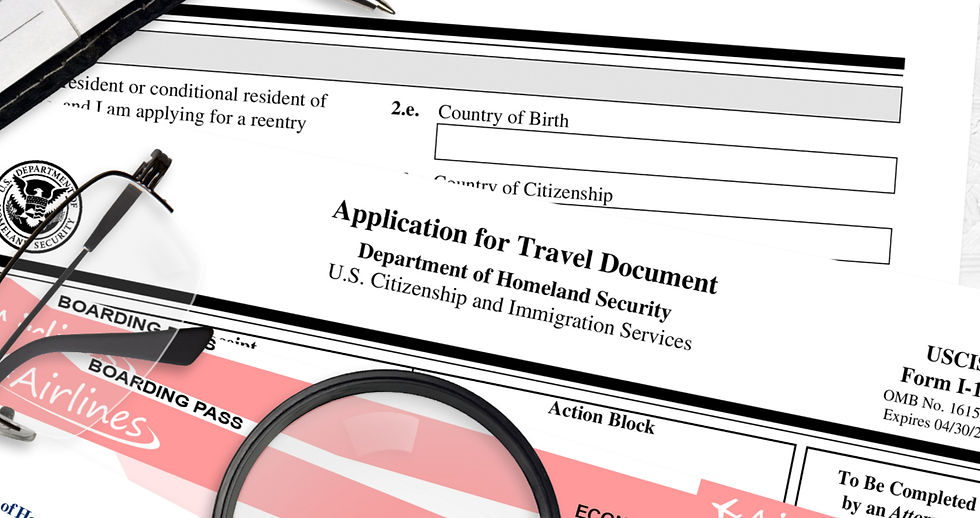
You apply for this permission by filing the appropriate form, an Application for Travel Document. Ideally, you file this concurrently with your Green Card application. If you didn’t file it initially, you can file it separately while your case is pending.
Crucial Warning: You must receive the physical Advance Parole document (often a paper document or a combo card with your work permit) before you leave the United States. If you file the form and leave while it is still pending, the travel request itself will be denied, and your Green Card application could be in jeopardy.
Exceptions to the Rule: H-1B and L-1 Visa Holders

Immigration law is full of exceptions, and this is a big one. If you are currently in the U.S. on a valid H-1B (specialty occupation) or L-1 (intracompany transferee) visa, you might not need Advance Parole to travel.
Holders of these specific visas (and their dependents on H-4 or L-2 visas) are allowed to travel and re-enter the U.S. using their valid visa stamps, even if they have a Green Card application pending. This is because these visas allow for "dual intent"—meaning you can intend to stay temporarily for work and permanently as a resident.
However, strict conditions apply:
You must have a valid H-1B or L-1 visa stamp in your passport to re-enter.
You must be returning to the same employer.
You must not have any "inadmissibility" issues (like criminal records).
Even if you fall into this category, consulting with an attorney before you travel is highly recommended to ensure your specific situation is safe.
The High-Risk Zone: Asylum Seekers

If you have a pending asylum application, the rules are different and much stricter.
Returning to the country you are claiming asylum from is incredibly dangerous for your case. Remember, asylum is based on a "well-founded fear of persecution" in your home country. If you voluntarily travel back there, USCIS will likely conclude that you are not actually afraid of returning. This can lead to a denial of your asylum claim.
Even traveling to a third country (not your home country) can be risky. You generally need Advance Parole to travel while an asylum case is pending, but getting it approved is difficult and usually requires a compelling humanitarian reason.
Risks of Travel Even with Permission
Here is the scary truth: Advance Parole does not guarantee re-entry.
When you return to the U.S. border or airport, a Customs and Border Protection (CBP) officer makes the final decision on whether to let you in. They can deny entry if they find you inadmissible for reasons such as:
Criminal History: Even minor offenses or arrests can cause major problems at the border.
Prior Immigration Violations: If you have previous periods of "unlawful presence" in the U.S., leaving the country could trigger a 3-year or 10-year bar from returning, even if you have Advance Parole.
Pending Removal Proceedings: If you are in deportation proceedings, leaving the country can result in an automatic order of removal (called "self-deportation").
Because of these risks, we often advise clients with any criminal history or prior overstays to simply stay in the U.S. until their Green Card is in hand. It’s better to miss a vacation than to be stuck outside the country unable to return to your life.
Practical Tips for Safe Travel

If you have your Advance Parole (or valid dual-intent visa) and decide to travel, follow these steps to protect yourself:
Check Your Documents: Ensure your passport is valid for at least six months beyond your return date. Make sure your Advance Parole document is original (not a photocopy) and has not expired.
Bring Proof of Your Pending Case: Carry a copy of your I-485 Receipt Notice (Form I-797) to show that you have a legal basis to be in the U.S.
Be Honest with CBP: When the officer asks the purpose of your trip or your status, answer truthfully. You are an applicant for Adjustment of Status returning to pursue your application.
Prepare for Secondary Inspection: Traveling on Advance Parole often triggers a "secondary inspection" at the airport. This is standard procedure. Don't panic. You will likely be taken to a separate room for further questioning and document verification. This can take anywhere from 30 minutes to a few hours, so don't book tight connecting flights.
Don't Guess—Get Guidance

The freedom to travel is important, but your future in the United States is more important. The rules surrounding travel while a case is pending are complex and unforgiving. A quick trip across the border shouldn't cost you your Green Card.
At Jarbath Peña Law Group, we help you weigh the risks and benefits of travel based on your unique immigration history. We can help you file for Advance Parole, advise you on specific travel dates, and prepare you for what to expect at the border.
Planning a trip but worried about your immigration status? Contact Jarbath Peña Law Group today at 305-615-1005 for a consultation before you book your flight.


Comments