
.png)

The Role of Mediation in Divorce: Why It Can Save You Time and Money

By Jarbath Peña Law Group

When most people think of divorce, they picture heated courtroom battles, expensive legal fees, and a long, draining process. This adversarial image, often portrayed in movies, is known as litigation. While litigation is sometimes necessary, a growing number of couples are choosing a more cooperative and efficient path: divorce mediation. Mediation is a structured, collaborative process that empowers couples to make their own decisions about their future, rather than leaving them in the hands of a judge.
Mediation is not about saving a marriage; it is about ending it respectfully and constructively. It offers a way to navigate the complexities of divorce while preserving your finances, your time, and your emotional well-being. At Jarbath Pena Law Group, we often recommend mediation as a powerful first step for many separating couples. This informational guide explains what divorce mediation is, how it works, and why it can be a smarter choice for your family.
What is Divorce Mediation?

Divorce mediation is a private and confidential form of alternative dispute resolution. In this process, a neutral third-party professional, known as a mediator, helps a divorcing couple negotiate the terms of their separation. The mediator does not make decisions for the couple or provide legal advice. Instead, their role is to facilitate productive communication, manage conflict, identify key issues, and guide the spouses toward a mutually acceptable agreement.
The goal is to produce a comprehensive Marital Settlement Agreement (MSA) that covers all aspects of the divorce, including:
Division of Assets and Debts: How to equitably divide property, investments, bank accounts, and liabilities.
Parenting Plan and Timesharing: Creating a detailed custody schedule that is in the best interest of the children.
Child Support: Calculating support based on Florida’s guidelines.
Alimony (Spousal Support): Determining if one spouse will provide financial support to the other, and for how long.
Once the MSA is signed by both parties, it is submitted to the court to be incorporated into the final divorce decree, making it legally binding.
The Mediation Process: A Step-by-Step Overview
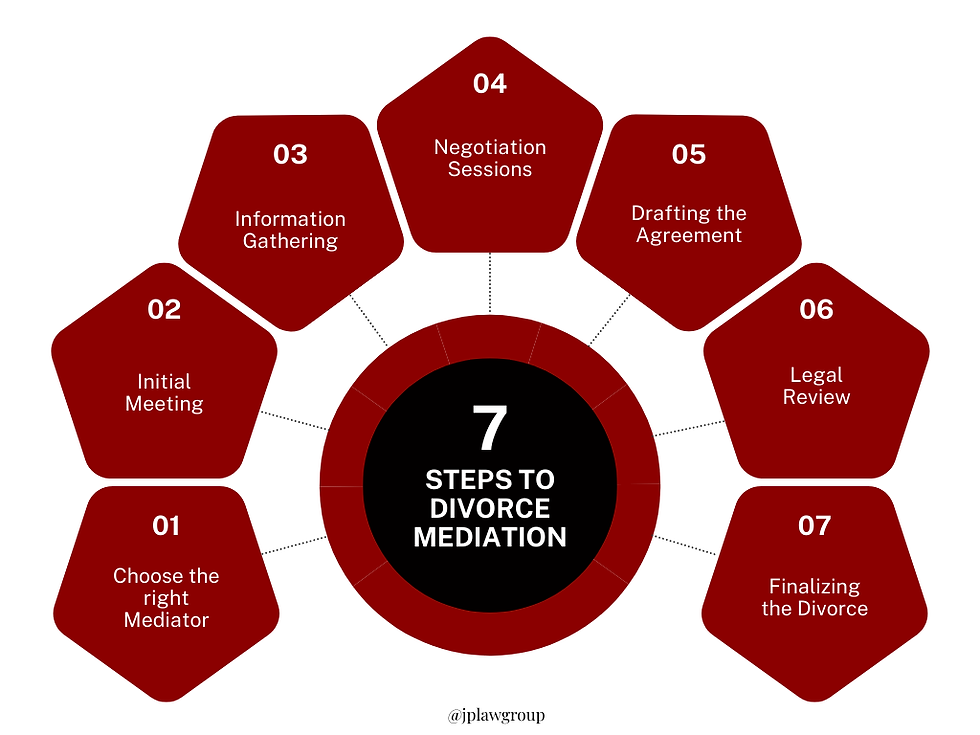
While every mediation is unique, the process generally follows a structured path designed to foster agreement.
Choosing a Mediator: The first step is for the couple to select a qualified mediator. Mediators are often experienced family law attorneys or mental health professionals with specialized training in conflict resolution.
Initial Meeting: The process begins with an introductory session where the mediator explains the ground rules, the goals of mediation, and the confidential nature of the discussions.
Information Gathering: Both spouses will be required to provide full financial disclosure. This involves gathering documents related to income, assets, and debts. This transparency is essential for fair negotiations.
Negotiation Sessions: The couple, guided by the mediator, will work through each issue of their divorce one by one. The mediator helps them explore different options, find common ground, and brainstorm creative solutions that a court might not be able to order.
Drafting the Agreement: Once a consensus is reached on all issues, the mediator (or one of the party's attorneys) will draft the Marital Settlement Agreement.
Legal Review: It is crucial for each spouse to have their own independent attorney review the draft agreement before signing. An attorney can ensure their client's rights are protected and that they fully understand the legal implications of the terms.
Finalizing the Divorce: After the MSA is signed, the necessary paperwork is filed with the court. In many uncontested cases, the couple may not even need to appear before a judge to finalize their divorce.
The Major Benefits of Choosing Mediation

Compared to traditional litigation, mediation offers significant advantages that can make a difficult life transition much more manageable.
1. It Saves You Money
Litigation is expensive. The costs of attorneys' fees, court filings, expert witnesses, and multiple hearings can quickly add up, often depleting the very assets you are trying to divide. Mediation is typically far less costly. Instead of two lawyers billing for every phone call and court appearance, the couple usually splits the cost of one mediator. This cost-effective approach leaves more financial resources available for both spouses to start their new lives.
2. It Saves You Time
A contested divorce in court can drag on for a year or even longer, as schedules are dictated by the court's crowded docket. Mediation, on the other hand, moves at the couple's own pace. You can schedule sessions as frequently as you like and resolve your case in a matter of weeks or months. This efficiency allows both parties to move forward with their lives much sooner.
3. You Retain Control
In litigation, a judge who knows very little about your family will make final, binding decisions about your children, your property, and your finances. Mediation keeps the decision-making power in your hands. You and your spouse are the experts on your family's needs. This process allows you to craft a customized agreement that works for your unique situation, rather than having a one-size-fits-all solution imposed on you.
4. It Is Confidential
Court proceedings are a matter of public record. Anyone can sit in on your divorce trial or read the documents filed in your case. Mediation is completely private. All discussions and negotiations happen behind closed doors, protecting your family’s privacy and personal financial information from public scrutiny.
5. It Fosters Better Co-Parenting
Perhaps the most important benefit for couples with children is that mediation helps preserve a functional co-parenting relationship. The adversarial nature of litigation often destroys any remaining goodwill between parents, making future cooperation nearly impossible. Mediation, by its nature, is collaborative. It teaches couples to communicate respectfully and solve problems together—skills that are invaluable for raising children after a divorce.
Is Mediation Right for Everyone?

Mediation is highly effective for most couples, but it is not appropriate for every situation. It may not be suitable in cases involving domestic violence, significant power imbalances, or if one spouse is suspected of hiding assets. In these scenarios, the structure and legal protections of the court system may be necessary. An experienced attorney can help you determine the best path forward for your specific circumstances.
Let Us Help Guide You

Even within the collaborative framework of mediation, having expert legal guidance is essential. An attorney can act as your consultant throughout the process, providing advice, helping you understand your rights, and reviewing the final agreement to ensure it is fair and enforceable.
The team at Jarbath Pena Law Group is highly skilled in both mediation and litigation. We can help you:
Determine if mediation is the right choice for your divorce.
Prepare you for mediation by organizing your financial documents and clarifying your goals.
Advise you during negotiation sessions to ensure your interests are protected.
Draft or review your Marital Settlement Agreement before you sign.
Represent you in court if mediation is unsuccessful or inappropriate for your case.
We are committed to helping you find the most peaceful and effective path to resolving your divorce, allowing you to move forward with confidence and security.
If you are considering divorce and want to learn more about how mediation can save you time, money, and stress, contact Jarbath Pena Law Group. Call us at 305-615-1005 or visit our website at www.jp-lawgroup.com to schedule a consultation.


Comments