
.png)

Re-Entry Risks Explained: What Every Immigrant Should Know Before Leaving the U.S.

By: Jarbath Peña Law Group

You have a family wedding abroad. A parent is ill and needs you. Or perhaps you simply have not been back to your home country in years and the time has finally come.
For immigrants living in the United States, the decision to travel internationally is rarely simple. Beneath the excitement of the trip sits a question that does not go away: “Will they let me back in?”
Leaving the United States is easy. It is the return journey that carries hidden risks that many people do not discover until they are standing at a port of entry, being told they cannot come home.
This guide walks through the most common re-entry risks, what triggers them, and what you can do to protect yourself before you ever board a flight. Given the current immigration enforcement environment, understanding these risks has never been more important.
The Doctrine of "Entry": Every Return is a New Admission

This is the concept that surprises people most—and it is the foundation of understanding re-entry risk.
Every time you return to the United States from abroad, you are legally seeking a new admission. It does not matter how long you have lived here, how many years you have paid taxes, or how strong your ties to this country are. The U.S. Customs and Border Protection (CBP) officer at that port of entry will evaluate you as if you are seeking to enter for the first time—reviewing your entire history to determine whether you are admissible under current law.
Having a valid visa, a Green Card, or an Advance Parole document gives you the right to present yourself for admission. It does not guarantee that admission will be granted. The CBP officer has the final say. If something in your background makes you inadmissible—even something you believed was long resolved—they have the authority to turn you away.
The Re-Entry Risks That Catch People Off Guard

The most dangerous aspect of re-entry risk is that many of the triggers are things people assumed were behind them. Here are the situations we see most often.
A Criminal Record—Even an Old One
This is one of the most common and most devastating surprises at the border. A conviction from years ago—one that never caused any problem while you remained in the United States—can become an active ground of inadmissibility the moment you seek re-entry.
• Crimes Involving Moral Turpitude (CIMT) cover a broad range of offenses—fraud, theft, many assault charges—and can render someone inadmissible even for a single conviction, though a narrow exception exists for certain low-level, first-time offenses.
• Drug-related offenses are treated with particular severity, and there's no time limit on how far back a conviction can reach. Even a single, decades-old marijuana possession conviction can be a serious bar to re-entry — though limited waiver relief may exist depending on the amount involved and the circumstances.
• Multiple convictions with a combined sentence of five or more years can also trigger inadmissibility, regardless of how much time has passed.
What makes this so difficult is that remaining inside the United States may have shielded these issues from scrutiny. Leaving and seeking re-entry forces CBP to evaluate the full record.
Past Immigration Violations
Your immigration history is fully visible to every CBP officer at every port of entry. Violations that felt distant or resolved can re-emerge at the worst possible moment.
• Unlawful presence. If you previously lived in the U.S. without authorization for more than 180 days and then departed, a 3-year bar may have been triggered. More than one year of unlawful presence triggers a 10-year bar. Leaving the country again can reactivate these bars.
• Misrepresentation or fraud. If you ever provided incorrect information on a visa application or to an immigration officer—even unintentionally—this can be treated as a permanent ground of inadmissibility.
• A prior deportation or removal order. If a removal order exists in your record—even one you were never formally removed under—departing the United States can be treated as self-execution of that order, triggering its own separate reentry bar. Attempting to re-enter afterward can be extraordinarily difficult.
Changes in Your Circumstances or the Law
Your situation when you leave may not be your situation when you return. If you hold a conditional Green Card based on marriage and your relationship has since ended or deteriorated, a CBP officer may question your status upon re-entry. Immigration law also changes, and a circumstance that posed no problem under prior policy may be evaluated differently under current enforcement priorities.
Advance Parole: A Permission Slip, Not a Guarantee
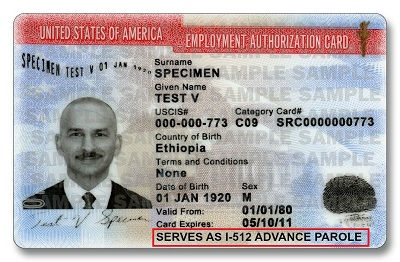
For individuals with a pending Green Card application, Advance Parole is the document that allows international travel without abandoning that case. Often issued as part of a “combo card” alongside an Employment Authorization Document (EAD), it serves as formal permission from the government to leave and return while your application is being processed.
But Advance Parole is frequently misunderstood. It preserves your pending application—it does not guarantee your re-entry, and it does not erase underlying inadmissibility issues. A CBP officer can still deny you entry based on a criminal conviction, a fraud finding, or any other pre-existing ground, regardless of whether you hold a valid Advance Parole document.
Traveling on Advance Parole when your history includes any complicating factor—unlawful presence, a criminal record, prior immigration violations—should only be done after a thorough, individualized legal review. What the document permits on its face and what is actually safe for your specific case are not always the same thing.
What to Do Before You Book Any International Travel

Your life in the United States—your family, your home, your work, everything you have built here—is worth protecting with more than a guess. Before any international trip, take these steps seriously.
• Be honest about your history. Think through every interaction with law enforcement and immigration authorities—in the United States and abroad. Things you may have minimized or forgotten can surface at the border.
• Know exactly what your documents allow—and what they do not. Whether you hold a Green Card, a visa, a combo card, or Advance Parole, understand the specific permissions and limitations of each document before you travel.
• Gather your supporting documentation. If you have a prior criminal case, obtain the certified court disposition. If you have an approved waiver, bring a copy. Travel with everything that establishes and supports your legal status in the United States.
• Consult an immigration attorney before you leave. This is the most important step. An experienced attorney can review your complete history, identify risks you may not be aware of, and give you an honest assessment of whether travel is safe for your specific situation. In the current immigration environment, that consultation is not optional—it is essential.
Do Not Let a Trip Become a Permanent Separation

For so many families in our community, international travel is not casual. It is meaningful—a parent’s illness, a milestone celebration, a need to reconnect with where you come from. The anxiety that comes with it is real, and it is valid.
At Jarbath Peña Law Group, we take that anxiety seriously. We help clients throughout Miami and South Florida understand their true re-entry risk before they travel—reviewing their complete immigration and criminal history, identifying potential flags, and giving them the clear, honest guidance they need to make an informed decision.
You have worked too hard to build your life here to risk it on incomplete information. Know what you are walking into before you leave.
Planning to travel and concerned about re-entering the U.S.? Contact Jarbath Peña Law Group today at 305-615-1005 to schedule a consultation before you book anything.


Comments