
.png)

Advance Parole: What You Need to Know

By Jarbath Peña Law Group

Navigating the U.S. immigration system can often feel like being on a long journey where you are not quite sure of the rules. You have filed your application for a Green Card, and now you are waiting. But life does not stop. A family emergency arises back home, or a once-in-a-lifetime career opportunity requires international travel. This leaves you with a critical question: "Can I leave the U.S. without wrecking my immigration case?"
For many, the answer lies in a special travel document called Advance Parole. Think of it as a pre-approved permission slip from the U.S. government that allows you to step outside the country and return without your pending application being automatically denied.
However, Advance Parole is not a simple hall pass. It is a complex tool with specific rules, risks, and benefits. Understanding how it works is essential to protect your future in the United States. This guide will break down everything you need to know about this crucial travel document.
What is Advance Parole?
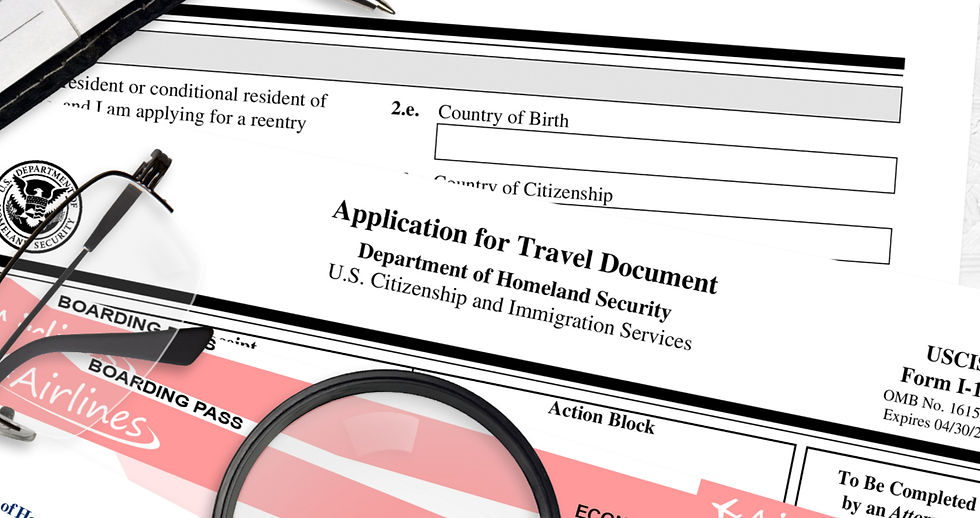
At its core, Advance Parole is a document that gives you permission to re-enter the United States after traveling abroad while your application for permanent residency (a Green Card) is still being processed.
Ordinarily, if you have a pending Adjustment of Status application (Form I-485) and you leave the U.S. without permission, USCIS will consider your application "abandoned." This results in an automatic denial. Advance Parole prevents this abandonment from happening.
It is important to dispel a common myth: Advance Parole is not a visa, and it is not a Green Card. It is a temporary travel document designed for a very specific purpose. Most importantly, while it gives you permission to return to a U.S. port of entry, it does not guarantee you will be allowed back into the country. We will get into that more later.
Who Needs to Apply for Advance Parole?

Generally, you should apply for Advance Parole if you have a pending Adjustment of Status application and you intend to travel internationally before your Green Card is approved.
This applies to most applicants, including those applying for a Green Card through:
A family-based petition (like marriage to a U.S. citizen).
An employment-based petition.
Asylum or refugee status.
If you are in one of these situations, you will likely file the Application for Travel Document, to request Advance Parole. Many people file this at the same time they file their Adjustment of Status application.
The Exception: H-1B and L-1 Visa Holders
There is a significant exception for individuals in the U.S. on certain work visas, specifically the H-1B (specialty occupation) and L-1 (intracompany transferee) visas. Because these visas carry "dual intent," their holders (and their H-4 or L-2 dependents) can travel abroad and re-enter using their valid visa stamp without abandoning their pending Green Card application. However, even for these individuals, having an Advance Parole document as a backup is a wise strategy.
The Application Process: Getting Your Travel Document
The process for obtaining Advance Parole is fairly straightforward, but it requires patience.
Filing Application for Advance Parole: You must complete and file the application form with USCIS. If you are filing it based on a pending adjustment of status, there is typically no extra filing fee. You will need to provide supporting documents, such as a copy of your receipt notice.
Waiting for Approval: This is often the longest part of the process. Processing times can vary widely, from a few months to over a year. You can check current USCIS processing times online, but they are subject to change.
Receiving the Document: Once approved, you will receive your Advance Parole document. It might be a standalone paper document or, more commonly, a "combo card." This card serves as both your Employment Authorization Document (EAD) and your Advance Parole travel permit.
CRITICAL REMINDER: You must wait to receive the physical Advance Parole document in your hands before you leave the United States. If you travel while your Advanced Parole application is still pending, it will be denied, and your Adjustment of Status application will be considered abandoned.
The Benefits and Risks of Traveling on Advance Parole

Traveling with this document offers one huge benefit: the freedom to leave the U.S. for important personal or professional reasons without terminating your Green Card application. However, this benefit comes with significant risks that you must understand.
Benefit: Maintaining Your Application
The primary purpose of Advance Parole is to preserve your pending Adjustment of Status application. It allows you to attend a family wedding, care for a sick relative, or handle business abroad without having to start your entire Green Card process over from scratch.
Risk: Re-entry is Not Guaranteed
This is the single most important thing to understand about Advance Parole. The document allows you to travel to a U.S. port of entry (like an airport), but the final decision to let you in rests with the Customs and Border Protection (CBP) officer who inspects you.
A CBP officer can deny your entry if they find you are "inadmissible" for any reason, such as:
Criminal History: An arrest or conviction, even a minor one, could prevent you from re-entering.
Unlawful Presence: If you previously accumulated more than 180 days of "unlawful presence" in the U.S., leaving the country—even with Advance Parole—can trigger a 3-year or 10-year bar to re-entry.
Fraud or Misrepresentation: If the officer suspects you have committed immigration fraud, they can deny your entry.
Think of Advance Parole as a ticket to get to the front of the re-entry line. It does not guarantee you will get through the door.
Practical Advice for a Smoother Journey

If you have weighed the risks and decide to travel, here is what you can do to prepare:
Carry Original Documents: Never travel with a photocopy. You must have your original Advance Parole document or combo card with you. Also, carry your valid passport.
Bring Supporting Evidence: It is wise to carry a copy of your Application for Adjustment of status receipt notice (Form I-797) to show the (Customs and Borer Patrol) CBP officer proof of your pending application.
Expect Secondary Inspection: When you arrive, the CBP officer will likely escort you to a separate area known as "secondary inspection." Do not panic; this is standard procedure for travelers using Advance Parole. An officer there will verify your documents and status before admitting you.
Be Honest and Patient: Answer all questions from the CBP officer truthfully and calmly. The process can take time, so be prepared for a potential wait.
Legal Guidance You Can Trust

The decision to travel while your immigration case is pending is not one to be taken lightly. The stakes are incredibly high, and a mistake can have life-altering consequences. You should not have to make this decision based on guesswork or advice from a friend.
At Jarbath Peña Law Group, we provide expert legal guidance you can trust. We will review your entire immigration history to assess the specific risks you might face when traveling. We help you prepare your Advance Parole application correctly and advise you on what to expect at every step of your journey. Your dream of a future in the U.S. is too important to risk.
Considering travel but unsure about your immigration case? Contact Jarbath Peña Law Group today at 305-615-1005 for a consultation before you book any tickets.


Comments